
The kettle is boiling, your next meeting is in five minutes, and “take a deep breath” sounds like one more instruction to get wrong. A breathing pause can be simpler than that: notice a few ordinary breaths, then decide whether you want to stay with them. The point is attention, not a performance.
Start with what is already happening
Sit or stand in a position that feels comfortable enough, and let your breathing continue at its own pace. You might notice where the breath is easiest to feel: around the nostrils, in the chest, or lower in the abdomen. There is no need to make it deeper.
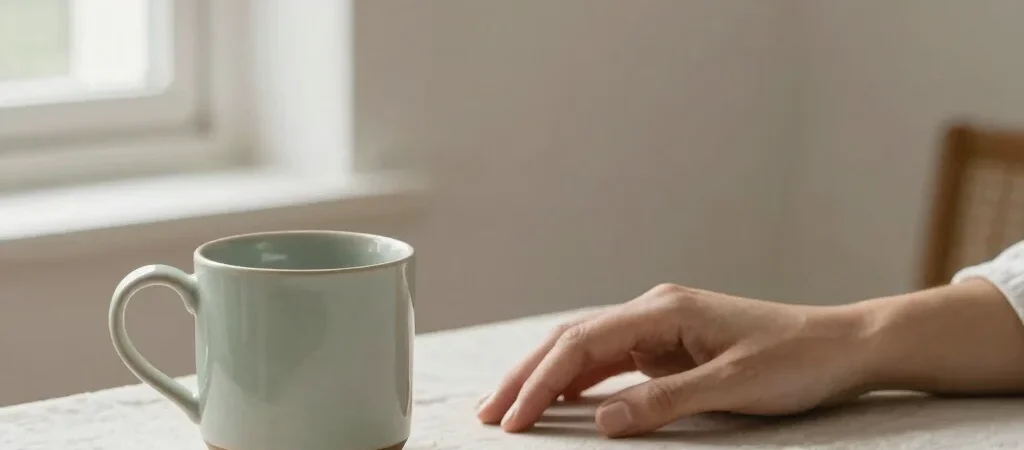
Try following three or four breaths, then look around and name a detail in the room, such as the colour of a mug or the light on a wall. This gives the pause a clear beginning and end. If counting makes you tense, leave it out.
Keep the practice comfortable
Some breathing exercises ask people to slow the exhale or hold the breath. Those are options, not requirements, and they will not suit everyone. For an everyday pause, easy breathing is a reasonable place to begin.
Stop and return to normal breathing if you feel dizzy, strained, or more uncomfortable. If focusing on breath feels unsettling, shift attention to your feet on the floor or another neutral sensation. A wellbeing exercise should not require pushing through distress.
Use it as a small pause
Attach the practice to an existing moment: while the kettle boils, before opening your laptop, or after you step outside. A few attentive breaths may offer a brief change of pace, but they are not a guaranteed way to remove stress or treat a health condition.
If breathing difficulties, panic, or other symptoms are affecting daily life, an exercise from a magazine is not a substitute for qualified care. For an ordinary pause, though, you can start with one breath noticed as it is—and stop there if that is enough.